Sunday, February 27, 2022

Singapore’s urban farmers seek high-tech solutions to turn waste into resources

Singapore's urban farmers seek high-tech solutions to turn waste into resources

Singapore's urban farmers seek high-tech solutions to turn waste into resources

SINGAPORE — Thousands of wriggling larvae won't deter this self-declared "urban farmer."

Chua Kai-Ning is one of the founders of Singapore's first urban insect farm, Insectta — a high-tech farm that rears the black soldier fly to help turn food waste into biomaterials for industrial use.

"The black soldier fly is a way to contribute to what we call the circular economy, where we produce things without anything going to waste," said the 26-year-old, who has a background in English linguistics.

Some in Singapore are turning to urban farming in this land-scarce city, as they look for high-tech ways to turn waste into useful resources.

Chua is one of them.

We are not only reimagining what we farm, but what we get out of the farming process.

Chua Kai-Ning

Co-founder, Insectta

"Their superpower is their ability to consume food waste," she said of the black soldier fly, regularly scooping up a handful of writhing insects with her bare hands throughout the farm visit.

"A kilo of larvae can go through four kilograms of waste in just 24 hours," she said, explaining that pre-consumer food waste — primarily soybean leftovers and spent grain from the beer-brewing industry — is fed to the larvae.

But the work doesn't stop there.
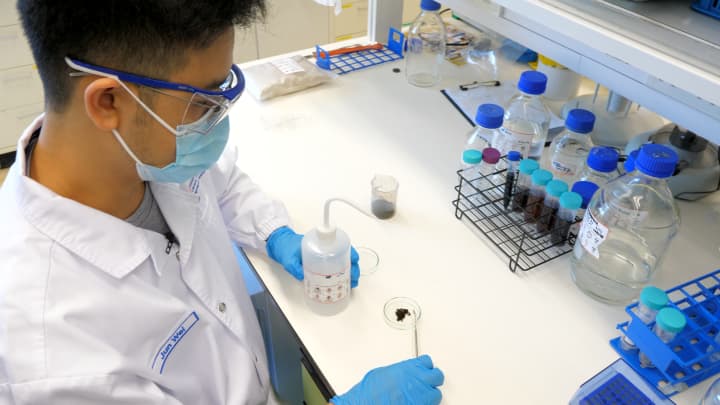
Insectta laboratory water-soluble melanin

Insectta's co-founder and chief technology officer Phua Jun Wei demonstrating water-soluble melanin derived from their black soldier fly larvae.

From the insect farm, the trays of larvae are transported to a laboratory on the other side of the island state. There, biomaterials are extracted from the larvae and used to produce valuable substances for electronics, pharmaceuticals and cosmetics, such as chitosan and melanin.

The future of urban agriculture, Chua maintained, is in deep technology. Deep tech companies are often start ups founded on scientific and engineering breakthroughs, aimed at harnessing technology to address environmental or societal challenges.

"We are not only reimagining what we farm, but what we get out of the farming process."

Pioneers such as Insectta are not the only ones coming up with high-tech ways of farming to cater to a world with evolving needs. Farmers in typically traditional environments are also tapping into technology to bring added value to their fields of specialty.

Eco-Ark is one such example. The closed-containment floating fish farm located in the eastern side of Singapore uses seawater that has been optimally treated to farm fish.

The farm — an area slightly smaller than two basketball courts — also uses green energy tapped from its solar roof to power about 20% of its farming activities, the company said.
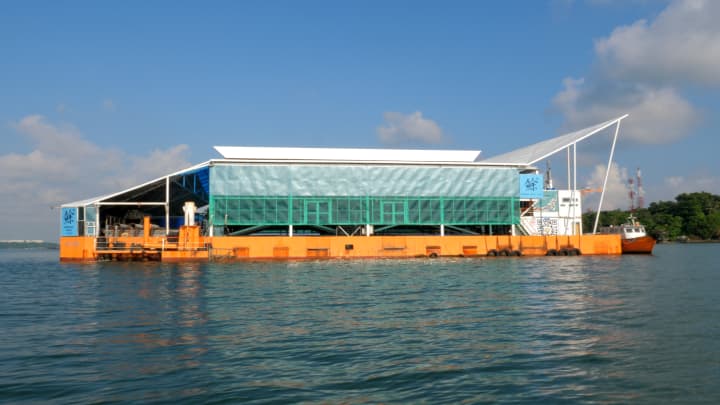
Eco-Ark closed-containment floating fish farm Singapore

The Eco-Ark is a closed-containment floating fish farm located off a Singapore coast, yielding more than 160 tonnes of fish a year.

"We produce our own oxygen, we produce our own ozone," said Leow Ban Tat, CEO of Aquaculture Centre of Excellence, which built Eco-Ark.

Open-net fish farms are vulnerable to environmental threats such as plankton blooms, oil spills and warmer waters due to climate change. Unlike these traditional farms, fish on the Eco-Ark are contained in seawater that is filtered and treated to kill pathogens.

"As fish grow, they produce a lot of ammonia and nitrates," he explained, adding that water discharged back to the sea is treated and free of waste.

In addition to a water filtration system that improves the mortality of fish reared, the high-tech floating farm is the first in the country to have post-harvest facilities, said Leow.

After cleaning and preparing ready-made fish for consumption, the fish bones and fish heads left behind are turned into pellets that can be used as plant fertilizer, ensuring no unnecessary waste.

Singapore sets its sights on high-tech farming

Traditionally, urban farms are not known to be energy efficient. Critics say that growing food with the help of high-tech systems to boost artificial farming environments, such as in climate control, raises energy costs.

With the challenges of climate change and a growing population, research and development has become a critical to overcoming threats to sustainability with the help of technology. 

In its latest budget, Singapore set aside 60 million Singapore dollars (about $45.2 million) to encourage farmers to utilize technology. The Agri-Food Cluster Transformation Fund was established in February to help farmers better apply technology to local food production.

Separately, more than 23 million Singapore dollars from the Sustainable Urban Food Production grant have been utilized to fund a dozen research and development projects.

The goal of sustainability has drawn people like aquaculturist Nick Goh to fish farms like Eco-Ark.

"This is actually what I wanted to do. It is not sustainable if we keep on doing fish-netting outside, fishing, fish trawling," he told CNBC. "So if we have aquaculture in the field, we can actually first sustain the ocean, and second, sustain ourselves in terms of food security wise."
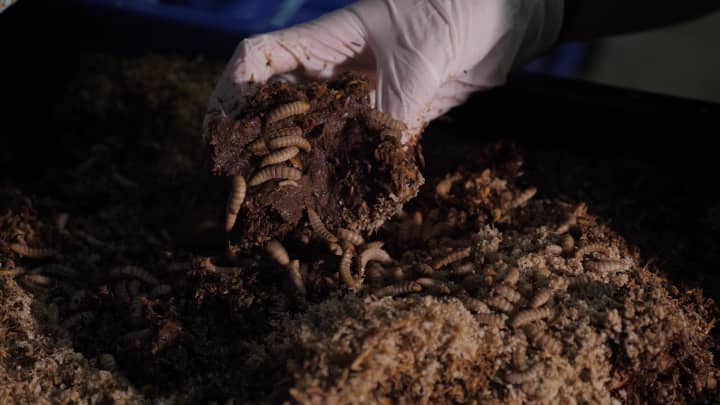
Insectta black soldier fly larvae

Black soldier fly larvae eating through a tray of pre-consumer food waste.

Insectta's Chua admits it's not been easy.

"Pioneering anything, especially in a deep tech industry, is definitely scary," Chua said. "But it's also empowering because you know that you're the first mover for change."

"If we don't go out there and look for new solutions to current problems such as the food waste crisis, dwindling natural resources, we're never going to make any headway."



Sent from my iPhone

Tuesday, September 21, 2021

Alzheimer's Disease: Signs and Symptoms - HealthXchange

Alzheimer's Disease: Signs and Symptoms - HealthXchange

​​​Alzheimer's Disease: Signs and Symptoms

Alzheimer's disease is the most common form of dementia. The Department of Neurology at National Neuroscience Institute (NNI) shares some of the signs and symptoms to look out for.

Favourite
Dementia: Alzheimer's Disease, Signs and Symptoms
Alzheimer's

symptoms, especially during the mild stage, are not easy to recognise and can be confused with normal ageing.

Alzheimer's disease: Most common form of dementia

Alzheimer's disease is the most common form of dementia and accounts for about 70 per cent of all cases. In an Alzheimer's patient, the brain cells degenerate gradually and eventually die, causing memory loss and a decline in other mental functions which affect day-to-day functioning.

"There is no cure for Alzheimer's disease though there are drugs which can slow the progression of symptoms," shares Adjunct Associate Professor Shahul Hameed, Senior Consultant from the Department of Neurology at National Neuroscience I​nstitute (NNI), a member of the SingHealth​ group.

This progressive brain disease usually occurs in older people, with symptoms typically appearing after the age of 60. However, there are a small number of patients who may develop Alzheimer's early, between the ages of 30 to 60. This is known as early onset Alzheimer's.

There are three general stages of the disease – mild, moderate and severe – and it may take years for the patient to progress from one stage to the next. Research suggests that the changes in the brain related to Alzheimer's can begin as much as a decade or more before symptoms first appear.

"The course of Alzheimer's differs from patient to patient but the disease is usually diagnosed at the mild stage. Alzheimer's causes brain cells to die and the affected brain regions to shrink in size. The damage is irreversible," says Adj Assoc Prof Hameed.

Signs and symptoms of Alzheimer's

The symptoms of Alzheimer's disease are not always easy to recognise and can be confused with normal ageing. One of the first signs of the disease is short-term memory loss with patients forgetting conversations and even where they live. Symptoms worsen at each stage of the disease.

The following ar​e common signs and symptoms of Alzheimer's:

Mild Alzheimer's

  1. Repeat questions
  2. Have difficulty remembering directions and recognising surroundings   
  3. Have trouble handling money, paying bills and balancing a cheque book
  4. Take more time than usual to complete daily tasks
  5. Misplace everyday items, often keeping them in inappropriate places, e.g. putting keys or reading glasses in the refrigerator
  6. Display mood and personality changes such as increased anxiety, restlessness and aggression
  7. Have poor judgement, e.g. wear warm clothing on a scorching day

Moderate Alzheimer's:

  1. Have long-term memory loss and forget their personal information such as name, occupation and date of birth
  2. Forget common words and the names of everyday objects
  3. Have trouble recognising family and friends
  4. Be unable to learn new things
  5. Have difficulty in carrying out tasks that involve several steps, e.g. bathing, getting dressed and cooking a meal
  6. Have trouble coping with new situations
  7. Experience hallucinations, delusions and become paranoid
  8. Display impulsive behaviour

Severe Alzheimer's

  1. ​​​Be unable to communicate
  2. Groan and grunt
  3. ​Have trouble swallowing food and eating
  4. Have lack of control of bladder and bowels
  5. Sleep most of the time
  6. Develop skin infections

"In the final stage of the disease, Alzheimer's patients may be bedridden and completely dependent on caregivers," says Adj Assoc Prof Hameed.​

​See page 2 to learn about the causes of Alzheimer's, and how the condition is diagnosed and treated.

See page 3 to learn find out how sundowning (or sundown syndrome) affects Alzheimer's patients.

Tap the banner above to find out how Memory Care on the Health Buddy app can help you maintain or improve your memory. Plus, get tips on how to care for a loved one with dementia.

Ref. S1​3

Check out more articles on brain diseases:

How to Detect Brain Diseases Early (Stroke, Parkinson's, Dementia, Eplilepsy)

Tips to Prevent Dementia

Dementia Caregiver Tips: Understanding Dementia Behaviours

Parkinson's: Common Misconceptions Tackled!

YOD: Dementia That Affects the Young

Contributor(s):

For HealthXChange

​​Terms of Use / Disclaimer
All information provided within this web and mobile application is intended for general information and is provided on the understanding that no surgical and medical advice or recommendation is being rendered. Please do not disregard the professional advice of your physician.​

Sharing is caring!


Sent from my iPhone

Friday, August 20, 2021

From Mrs. Ameena Essa.


--
Hello,

How are you doing today?
I sent you an email yesterday, did you receive it? It is a very
important message, anyway reply back to confirm that you already got
my message to enable me to give you more details..

Best Regards.
Mrs. Ameena Essa